Webhook Guides
Webhook Test
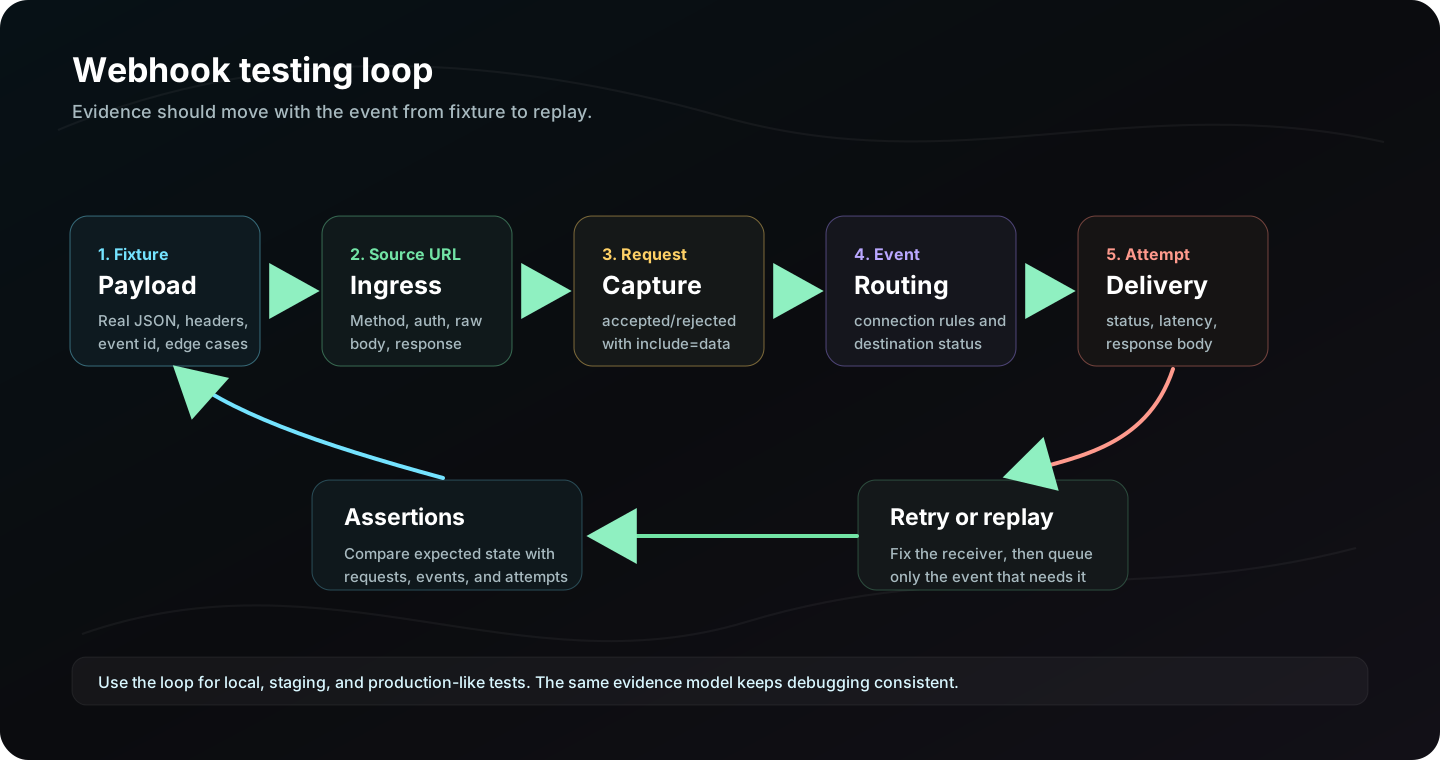
A webhook test proves the full path from sender to receiver: source URL, request capture, route matching, destination delivery, response body, retry behavior, and replay safety.
FastHook lets you run that test online with a public source URL while keeping the evidence needed to debug failures before production providers depend on the route.
Send a webhook test payload
curl -X POST "https://hook-xxxxxx.fasthook.io/" \
  -H "Content-Type: application/json" \
  -H "X-Test-Run: smoke-1" \
  -d '{
    "id": "evt_test_1",
    "type": "order.created",
    "data": {
      "order_id": "ord_102",
      "customer_id": "cus_88"
    }
  }'
What a good webhook test proves
A useful webhook test proves more than connectivity. It should show that the sender can reach the source URL, the payload and headers are captured, source authentication behaves as expected, connection filters match the intended route, the destination receives the delivery, and the receiver can handle retry without duplicate side effects.
That is why FastHook tests follow the request to event to attempt path. The request proves ingress, the event proves routing, and the attempt proves outbound delivery and receiver response.
Test checklist
- Confirm the request was accepted and captured.
- Confirm route filters matched the expected connection.
- Inspect the destination attempt response and latency.
- Retry one failed event after fixing the receiver.
- Replay a request only when routing or transformations changed.
Negative webhook tests
- Send a wrong HTTP method and confirm it is rejected.
- Send a payload with a missing required field and confirm the receiver returns the expected error.
- Send a duplicate event id and confirm the receiver does not repeat the side effect.
- Use a wrong signature secret and confirm the source rejects the request.
- Force a destination 500, fix the receiver, and retry only the failed event.
Inspect the webhook test
curl "https://api.fasthook.io/v1/requests?source_id=src_q6z62b6py5o79b&from=now-1h&to=now&limit=20&include=data" \
  -H "Authorization: Bearer $FASTHOOK_API_KEY" \
  -H "x-team-id: $FASTHOOK_TEAM_ID"
Test assertions
Keep assertions close to the evidence. Assert the request status, the event status, the destination attempt status, and the receiver-side idempotency record. Avoid relying only on the provider dashboard, because it may show that a request was delivered even when downstream business logic failed after returning 200.
Webhook test matrix
| Test | Expected evidence | Why it matters |
|---|---|---|
| Happy path | Accepted request, routed event, successful attempt. | Proves the full route works. |
| Bad auth | Rejected request with auth cause. | Prevents forged provider traffic. |
| Receiver failure | Failed attempt with response body. | Proves retry and recovery workflow. |